(9:118) Accepted Repentance – Part 1 [EP 65]

How do you know if your repentance has been accepted? Ultimately, only Allah ﷻ knows, but the Quran hints at some of the signs on how the process work.

One example is that of the three companions of the Prophet ﷺ mentioned is surah Tawbah who absconded from the battle of Tabuk; Hilal ibn Umayyah, Murarah ibn Rabi’ah and Ka’b ibn Malik. For context; the Roman empire had assembled an army of 200,000 men to march on Madinah to eliminate the Muslims whom they viewed as a threat. In response, the Prophet ﷺ gathered an army greater than ever before, reported to be up to 30,000 men, yet their numbers, weaponry and experience still paled in comparison to their enemy.

(20:78) NPCs [EP 64]

When telling the story of Ashura, our attention is often drawn to the main characters within the narrative, be it Prophet Musa (as) and Pharaoh, or Imam Hussein (ra) and Yazid. But little is ever said about what the NPCs in the story – the Non-Playable Characters. Across various mediums, whether it’s a film, a story, or a game, NPCs serve as the underlying foundation upon which the narrative unfolds. Think of the enemies encountered on the way to confronting the ultimate boss in a game, or the soldiers in the background of a great battle in a movie; they play an essential role in crafting the narrative landscape, but individually fade into obscurity within the overarching plot of the story.

(27:24) Tweets

Have you ever heard the tweets of a bird? In the story of Prophet Sulaiman (as), we are given a glimpse into the way these creatures think and speak, translated to us by Allah ﷻ. Its chirping would not have been dissimilar to the tweets at the start of this podcast, yet they are completely inaccessible to us. How strange it is to think these tweets carry sophisticated language and meaning within them, yet to us sound nothing more than a few simple sounds.

(56:8-10) Divine Luck

When describing people on the day of judgement, Allah ﷻ divides them into 3 camps: the people of the right, the people of the left, and the foremost – or at least that’s how they are commonly translated! Delve deeper, and you find a much richer meaning to them

(20:21) Have No Fear

Notice the order which Allah ﷻ gives His commands; you will find a wonderful subtlety which hides an ocean of meaning. As Musa’s (as) heart filled with fear at the sight of his staff turning into a snake, Allah ﷻ commanded him to “take it, and have no fear”. He leads with the action before addressing the emotion.

(7:80) Self Evident

This podcast is a tough one. Some topics are taboo to discuss, and none more so than this. So I’ve decided to take a different approach. Rather than outline my own reflection, I invite you to consider the evidence yourself and ask; how would you interpret them? If you read the verses yourself, what would you conclude they say?

Syria: Before & After

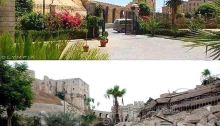
These are pictures of Allepo, Syria before and after current events. Harrowing. Really puts life in perspective. What’s worse is imagining what has happened to all the people that once walked these streets. Then, try imagine it happening in the UK… …the shops, homes and malls all gone …uncomfortable right? I never could have imagined…

Nostalgic Beauty

“Nostalgia is powerful. Instil good memories in your children of their religion, and they will forever look back at it and their faith with fondness. Just look at the Star Wars effect!” “People who have never seen beauty can’t give it” [Paraphrased, Sh. Idriss Watts​] An awesome talk by Sh. Idriss yesterday, providing much food…

The Path of Misguidance

Extremism like ISIS has had many forms in history. The original incarnation began at the time of the Prophet Muhammad (peace be upon him) when a man named Dhu Al-Khuwaysirah accused the Messenger of God of being unjust directly in His presence! This is the tradition of these people who feign religiosity whilst going against everything our religion teaches. They claim they know more than the one God sent to teach us!